

AI Marketing KPIs and Lead Tracking: What to Measure
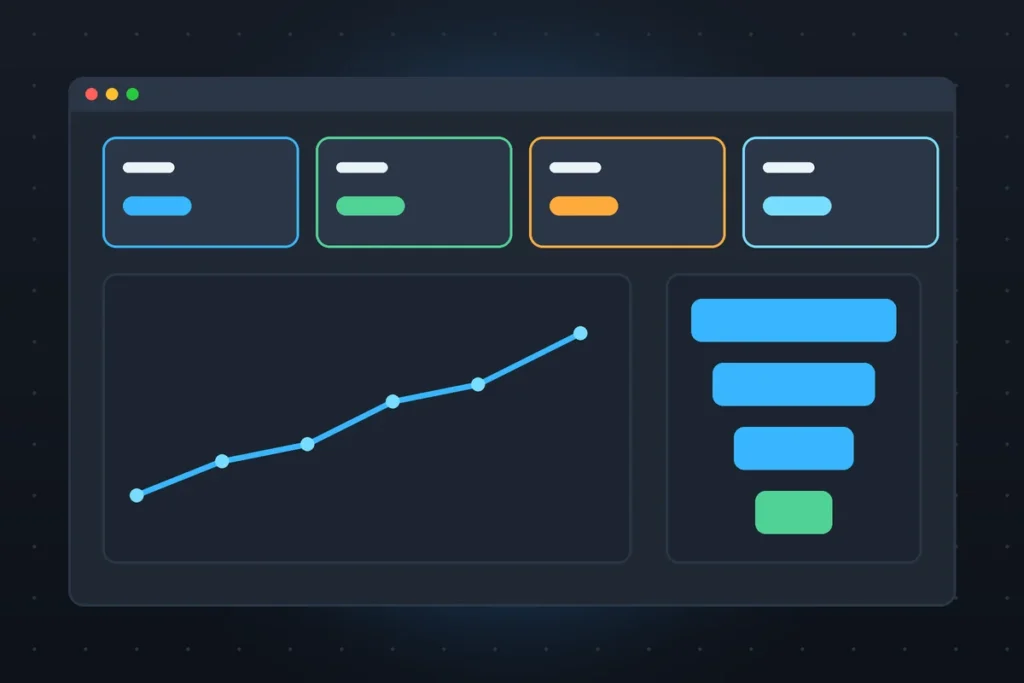
AI-driven marketing is only as useful as the numbers you trust. If reports are late, incomplete, or based only on what an ad platform claims, you cannot tell whether the work is producing enquiries. That is why AI marketing KPIs and lead tracking belong in the system from the start, not as an afterthought.
This article sets out the measures that usually matter, how lead tracking should work, and what a scheduled report ought to contain. It is written to sit alongside our guides to what AI-driven marketing is and AI Marketing Setup and Managed AI Marketing, and the wider picture of AI-driven marketing solutions.
Start with a short list of KPIs
It is easy to track dozens of numbers and still not know if marketing is working. A better approach is a short list of KPIs that your team will actually review, tied to the decisions you need to make.
For most small and mid-sized businesses, that list looks like this:
- Leads or enquiries. Form submissions, calls, chats or booked appointments that a person could reasonably follow up.
- Cost per lead, for any channel where you spend money, especially paid search and paid social.
- Verified conversions. Orders, signed agreements or qualified enquiries as they appear in your own records, not only in a platform dashboard.
- Website visits by channel, including organic search, paid search, social, email and, where you can see it, visits from AI search results.
- Organic search performance. Clicks, impressions and average position for the terms and pages you care about.
- Campaign efficiency. Spend, clicks, click-through rate and cost per click, broken down by platform and campaign.
You may also watch ranking movement for a focused set of terms, and simple engagement measures on social or email, as long as they do not crowd out the lead and conversion figures. Vanity totals — raw impressions with no path to an enquiry — should stay in the background.
Lead tracking has to come first
A KPI is only as good as the tracking behind it. Before you ask AI to report on performance, you need a clear path from a click or visit to an enquiry. That usually means website analytics plus conversion tracking on forms, calls and purchases, connected to the source of the visit where possible.
A solid lead-tracking setup answers three questions:
- What counts as a lead? Agree this in plain language. A newsletter signup is not the same as a request for a quote.
- Where is it recorded? The lead should appear in a place your team already uses, such as your inbox, CRM or store, not only in an ads report.
- Where did it come from? You should be able to see the channel and, where it is reliable, the campaign or page.
This is also the point at which many businesses discover gaps: a form that does not fire a conversion event, a call number that is not tracked, or paid campaigns sending traffic to a page with no clear next step. Fixing those gaps is unglamorous, and it does more for reporting quality than adding another chart.
Reconcile platform numbers with real enquiries
Ad platforms and your store or CRM often disagree. Each platform counts conversions in its own way, using its own attribution windows, view-through conversions, calls and values, sometimes with shipping included and sometimes without. None of this means the platform is “lying”, but it does mean you should not treat its total as the same thing as a real order or a real enquiry.
Every reporting period, the system should:
- Pull the conversions each platform reports.
- Compare them with the orders or enquiries in your own records.
- Explain the main gaps in plain language.
- Flag genuine tracking problems so they can be fixed, rather than argued over again next month.
This reconciliation is one of the most useful things an AI-supported reporting system can do, because it is tedious to do by hand and easy to skip. Once it is part of the schedule, budget decisions rest on firmer ground.
What a scheduled report should include
A scheduled report should arrive often enough to be useful, and be short enough that someone will read it. Weekly, fortnightly or monthly can all work; the cadence should match how quickly you spend money and how quickly you can act.
At a minimum, the report should cover:
- Campaign performance by platform and campaign, including spend, clicks, click-through rate, cost per click and cost per lead or purchase.
- Website visits by channel, including AI search where you can measure it.
- Organic clicks, impressions and average position.
- Total conversions by source.
- A reconciliation of platform-reported conversions against your real orders or enquiries.
- Keyword ranking movement that is large enough to notice.
- A short analysis, and the next period’s recommended actions.
The last point is the one that turns a data dump into a working tool. AI can assemble the tables and a first-pass analysis. A person should still review the recommended actions before anyone changes budgets, pages or ads.
Common mistakes to avoid
- Too many KPIs. If the report cannot be discussed in a short meeting, it is too long.
- Reporting without tracking repairs. A polished report on broken data wastes time.
- Trusting one platform’s dashboard alone. Use it, then reconcile it.
- No named reader. Someone in the business, or on the managed service, has to act on the report.
- No baseline. The first reporting period is for establishing a starting point, not for declaring success or failure.
How this fits Setup and Managed AI Marketing
Lead tracking, KPI agreement, reconciliation and scheduled reports are included in both AI Marketing Setup and Managed AI Marketing. If your team will run the system, the handover should include how to read the report and what to do when numbers do not match. If we run it for you, you should still see the same report and still approve public changes.
AISEO Tech is based in Bangalore and works with businesses in India, the US, the UK and Australia. If you want help agreeing KPIs and putting tracking and reporting in place, contact us. There is no obligation. You can also see how this sits inside the full service on our AI-driven marketing page.
Frequently asked questions
Which AI marketing KPIs should we start with?
Start with a small set you will actually use: the number of leads or enquiries, cost per lead where you spend on ads, conversions you can verify in your own records, and visits or clicks by channel. Add ranking and engagement measures only if they help you decide what to do next.
Why do ad platforms and my CRM show different conversion numbers?
Each platform counts conversions differently, using its own attribution windows and rules. Every reporting period, those numbers should be reconciled against your actual orders or enquiries, so you can explain the gaps and fix genuine tracking problems.
What should a scheduled marketing report include?
Campaign performance by platform, website visits by channel, organic search results, total conversions by source, a reconciliation against real enquiries or orders, notable ranking changes, and a short analysis with the next period’s actions.
Can our team run this reporting ourselves?
Yes. Lead tracking and scheduled reports are part of both AI Marketing Setup and Managed AI Marketing. After a setup engagement, your team can run the reports; on the managed option, we run them and bring you the decisions.

One Response
[…] numbers. It should show what changed, why it might have changed, and what to do next. That is why AI marketing KPIs and lead tracking matter as much as the tools […]
Comments are closed.