How AI Improves SEO, PPC and Social Media Marketing
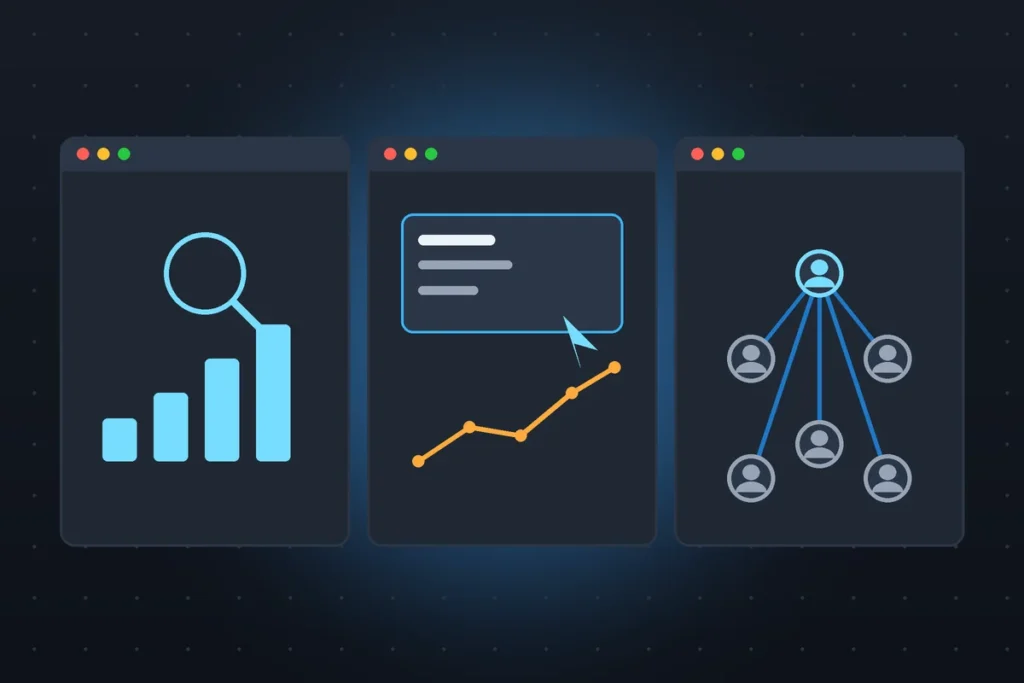
AI marketing automation is most useful when it is applied to the channels you already rely on, not treated as a separate project. For most small and mid-sized businesses, that means search engine optimisation, paid search and social media marketing — with email marketing and website analytics sitting alongside them.
AI can improve each of those channels by taking on the repetitive research, monitoring, first drafts and reporting, while people still set the strategy and approve what goes public. This article explains what that looks like in practice, and how the channels work better when they share the same tracking and KPIs. It sits alongside our guides to what AI-driven marketing is and AI Marketing Setup and Managed AI Marketing.
What AI can and cannot do across channels
AI is well suited to work that is frequent, structured and easy to check: gathering search and campaign data, watching for unusual changes, drafting variations of a page or ad, and assembling a report. It is a poor substitute for deciding what you sell, who it is for, and what you are willing to say in public.
Used well, AI marketing automation helps your team:
- See performance across search, paid campaigns and social in one scheduled report, instead of three disconnected dashboards.
- Spot problems earlier, such as a campaign that is spending quickly or a page that has lost rankings.
- Prepare first drafts of content, ads and posts for a person to edit and approve.
- Keep a regular cycle of research and optimisation, even in a busy week.
Used poorly, it produces a lot of content that nobody approved, and numbers that nobody has reconciled with real enquiries. The difference is the system around it: tracking, KPIs, a schedule, and a human approval step.
How AI improves SEO
Search engine optimisation is a long, steady activity. It involves understanding the terms people use, the pages you already have, the gaps on your site, and the way your pages appear in search results over time. That work is important, and it is also easy to postpone.
In an AI-driven setup, much of the supporting work can run on a schedule:
- Keyword and page research, so you can see which topics you already cover and where useful pages are missing.
- Ranking and visibility checks, so a drop or a gain is noticed in the next report rather than months later.
- First drafts of page updates, such as clearer headings, tighter introductions or new FAQ sections, ready for a person to edit.
- Technical reminders, when crawl or index issues show up in your tools and need a human decision.
AI does not “set and forget” SEO. Search results change, competitors publish, and your offer changes too. The value is that the checks and drafts keep arriving, so optimisation is a habit rather than a one-off project. A person still decides what is accurate, what matches your services, and what should be published.
How AI improves paid search (PPC)
Paid search moves faster than SEO. Budgets can be spent in a day, and small changes in bidding, keywords or landing pages can alter the cost of a lead quite quickly. That is why daily budget and enquiry checks matter.
AI marketing automation helps paid search by:
- Watching spend and results on a daily schedule, so an overspend or a dry spell is caught early.
- Summarising search terms, ads and landing pages that are producing clicks but not enquiries, ready for a person to act.
- Drafting new ad copy or suggested keyword changes for approval, rather than inventing campaigns that go live on their own.
- Feeding paid results into the same report as organic search and social, so you can see the whole picture.
It also supports a point that often causes confusion: ad platforms and your store or CRM often show different conversion numbers. A good system reconciles those figures with your actual orders or enquiries each reporting period. That is part of AI marketing KPIs and lead tracking, and it is as important as writing a better ad.
How AI improves social media marketing
Social media fails in two common ways. Either nothing is posted for weeks, or a lot is posted with little connection to what the business is trying to achieve. Automation should fix the first problem without creating the second.
A practical AI-supported social workflow looks like this:
- A simple plan of themes that match your offer and the questions customers actually ask.
- Draft posts and variations prepared on a schedule, in your tone, for a person to edit and approve.
- Monitoring of comments and mentions so that questions and complaints are not left sitting.
- Reporting that shows which posts led to site visits or enquiries, not only likes.
The approval step is especially important here. Social posts are public, easy to reshare, and hard to unsay. AI can draft; your team should still decide what is appropriate to publish.
Why the channels should share one system
SEO, paid search and social work better together than as three separate efforts. A page that ranks well can also be a landing page for ads. A question that appears often in social comments can become a useful piece of search content. email marketing can follow up the same offer. None of that happens if each channel is planned in isolation and measured with its own private numbers.
Shared lead tracking is the link. When a visitor becomes an enquiry, you should be able to see whether they came from organic search, a paid campaign, social or another source, and you should be able to compare that with what the platforms themselves report. That is what lets you move budget and effort with some confidence.
This is the core of AI-driven marketing at AISEO Tech: one system, used either as a setup your team runs or as a managed service, with scheduled reports and a person approving public work.
How to start without doing everything at once
You do not need to automate every channel in the first month. A sensible order is:
- Get tracking and a scheduled report working, even if the first version only covers one or two channels.
- Choose the channel that already has activity or budget, and run that through the system first.
- Add the next channel once the reports are familiar and the approval habit is in place.
AISEO Tech is based in Bangalore and works with businesses in India, the US, the UK and Australia. If you want help designing that sequence, contact us and tell us which channels you already use. There is no obligation. You can also read the full service outline on our AI-driven marketing page.
Frequently asked questions
Can AI improve SEO, paid search and social media at the same time?
Yes, if they sit inside one system with shared tracking and KPIs. Each channel still needs its own work, but research, checks, first drafts and reports can be carried out and scheduled with AI, then approved by a person.
Will AI publish social posts or ads automatically?
It should not. Drafts and suggested changes can be prepared automatically, but posts, emails, ads and new pages should be approved by a person before they go live.
Do we have to use every channel?
No. Many businesses start with tracking, reporting and one or two channels, then add more. The system is designed to grow with you.
Is this the same as AI marketing automation?
AI marketing automation is the name often used for this kind of scheduled work: research, monitoring, tracking, drafts and reports running consistently, with people still in charge of strategy and approvals.